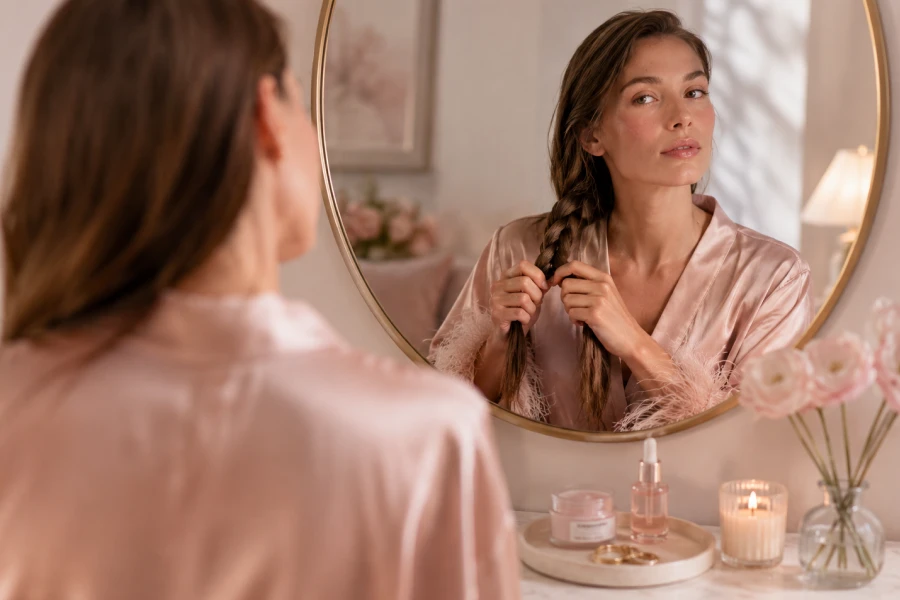
A shiny hair routine depends on care that smooths, protects, and respects texture. Shine is not only about adding glossy products. It often reflects how light moves across the hair surface. Roughness, buildup, dryness, and damage can interrupt that reflection. The right habits help strands look softer and cleaner. They also make your natural color appear more dimensional. You do not need an overwhelming routine to see improvement. You need smart steps that reduce dullness consistently. When the basics work together, shine feels effortless. Hair starts looking polished without constant styling stress.
Clean hair reflects light better when buildup stays controlled. Product residue can make strands look dull. Hard water and sweat may also affect brightness. Shampoo should cleanse the scalp without rough handling. Conditioner should soften the lengths without weighing them down. A weekly hair reset can refresh hair when buildup appears. Do not clarify too aggressively or too often. Watch how your hair feels after cleansing. Lightness, movement, and softness are useful signals. Shine improves when hair feels clean but not stripped.
Moisture helps dull hair regain softness and movement. Dry strands can scatter light unevenly. Heavy products may hide shine under residue. Balance comes from applying care strategically. Ends often need more conditioning than roots. Fine hair may prefer lighter leave-ins. A hair shine habits plan keeps moisture controlled. Apply product in small amounts first. Add more only where dryness remains visible. Glossy hair usually comes from precision, not excess.
Drying can either support shine or disturb it. Rough towel rubbing can lift the cuticle. A soft towel or cotton fabric feels gentler. Squeezing water out protects the strand surface. Air drying works best when hair is handled carefully. Blow-drying can look smooth with proper technique. A heat protection strategy helps reduce styling stress. Keep airflow moving instead of burning one section. Finish with hair fully dry before leaving. Controlled drying makes shine appear more polished.
Frizz can make hair appear less reflective. It often increases with humidity, dryness, or friction. Smoothing products should target the outer layers lightly. Too much serum can collapse volume quickly. A small amount on ends may be enough. Protective nighttime habits reduce morning roughness. A frizz control routine keeps shine visible longer. Avoid constantly touching styled hair during the day. Hands can transfer oil and disturb the finish. Less disruption often means a cleaner-looking glow.
Shine changes with products, weather, and wash timing. Tracking helps you understand those moving parts. Photos under the same light can reveal progress. Notes can show when hair looks flat or bright. AI tools may compare routines and highlight patterns. They can help identify buildup or moisture gaps. A personalized hair routine becomes clearer with evidence. Avoid changing several products at once. That makes results harder to interpret. Smart tracking turns shine into a repeatable outcome.
Weekly consistency keeps shine from depending on luck. Plan cleansing around real oil and buildup levels. Add deeper conditioning when ends feel rough. Use heat intentionally rather than automatically. Protect hair during sleep and workouts. Keep brushes and tools clean. Reassess products when seasons change noticeably. Trim damaged ends before they create more dullness. Shine becomes easier when care stays organized. The result feels polished, healthy, and naturally elevated.

Leave a comment